
Ca Website

Blog

Your blog category

Consulting & Transaction Advisory Services: A Complete Guide for Businesses
Blog

Consulting & Transaction Advisory Services: A Complete Guide for Businesses

In today’s competitive and rapidly evolving business environment, organizations constantly face complex financial decisions, mergers, acquisitions, investments, and restructuring opportunities. Making the right strategic choices can determine the long-term success and sustainability of a business. This is where Consulting & Transaction Advisory Services play a vital role. These services help companies analyze opportunities, manage risks, and execute high-value business transactions effectively. Consulting and transaction advisory professionals provide expert guidance to businesses throughout the lifecycle of financial deals and strategic decisions. From evaluating potential investments to managing mergers and acquisitions, these services ensure that organizations make informed decisions backed by financial insights, market analysis, and risk management strategies. Understanding Consulting & Transaction Advisory Services Consulting and transaction advisory services involve a wide range of professional solutions designed to help businesses manage financial transactions, strategic planning, and corporate restructuring. These services are typically provided by financial advisors, management consultants, chartered accountants, and corporate advisory firms with expertise in finance, law, and market analysis. The primary goal of these services is to assist businesses in making well-informed decisions when entering complex transactions. This includes analyzing financial performance, conducting due diligence, assessing risks, and structuring deals in a way that maximizes value for stakeholders. Whether a company is planning a merger, acquiring another business, raising capital, or restructuring operations, transaction advisory experts help guide the process with precision and strategic insight. Importance of Consulting & Transaction Advisory for Businesses Modern business transactions are rarely simple. Companies must consider multiple factors such as financial performance, legal compliance, market competition, and long-term strategic goals. Consulting and transaction advisory services provide businesses with the expertise needed to navigate these complexities. One of the key benefits of professional advisory services is improved decision-making. Advisors analyze financial data, market trends, and operational factors to provide accurate recommendations. This helps businesses avoid costly mistakes and identify profitable opportunities. Another important advantage is risk management. Every business transaction carries certain risks, including financial losses, regulatory challenges, or integration difficulties. Transaction advisory professionals identify these risks early and develop strategies to minimize their impact. Additionally, consulting services help organizations streamline processes and improve operational efficiency. By providing strategic guidance and performance insights, consultants help companies achieve sustainable growth. Key Components of Transaction Advisory Services Transaction advisory services cover several critical aspects of corporate transactions and financial decision-making. Financial Due Diligence Financial due diligence is one of the most important steps in any business transaction. Advisors thoroughly examine a company’s financial records, cash flows, assets, liabilities, and profitability before a deal is finalized. This process helps identify potential risks, hidden liabilities, and financial inconsistencies. It ensures that investors and business owners fully understand the financial health of the company involved in the transaction. Valuation Services Business valuation is essential when companies are buying, selling, or merging with other organizations. Transaction advisory experts determine the fair market value of a company based on its assets, earnings potential, industry trends, and economic conditions. Accurate valuation helps businesses negotiate better deals and ensures that transactions are financially fair for all parties involved. Mergers and Acquisitions (M&A) Mergers and acquisitions are complex transactions that require careful planning and execution. Advisory professionals assist businesses in identifying potential acquisition targets, evaluating strategic benefits, and negotiating transaction terms. They also support integration planning to ensure that the merged entities operate efficiently after the deal is completed. Capital Raising and Investment Advisory Many businesses require additional capital to expand operations, launch new products, or enter new markets. Consulting and transaction advisory firms help organizations identify suitable investors and funding sources. They also guide companies through the process of preparing financial documents, business plans, and investment proposals to attract potential investors. Restructuring and Turnaround Strategies In situations where businesses face financial difficulties or declining performance, consulting experts provide restructuring solutions. These strategies may involve cost optimization, debt restructuring, operational improvements, or changes in management structures. The goal is to restore financial stability and position the company for future growth. Benefits of Consulting & Transaction Advisory Services Businesses that leverage consulting and transaction advisory services gain several strategic advantages. Better Strategic Decision-Making Professional advisors provide data-driven insights and market intelligence that help businesses make informed decisions. This reduces uncertainty and improves overall strategic planning. Enhanced Financial Transparency Through financial analysis and due diligence, advisory services ensure transparency in financial transactions. This builds trust among investors, partners, and stakeholders. Risk Reduction Advisors identify potential financial, legal, and operational risks before they become major problems. Early risk detection allows businesses to implement preventive measures and safeguard their investments. Improved Deal Structuring Transaction advisory professionals help structure deals in a way that maximizes value for businesses while ensuring compliance with legal and regulatory requirements. Efficient Transaction Management Complex business transactions involve multiple stakeholders, deadlines, and documentation processes. Advisory experts coordinate these activities efficiently, ensuring smooth deal execution. Role of Technology in Transaction Advisory Technology has transformed consulting and transaction advisory services in recent years. Advanced financial modeling tools, data analytics platforms, and artificial intelligence help advisors analyze large volumes of financial data quickly and accurately. Digital platforms also enable real-time collaboration between advisors, clients, and investors. This improves communication, reduces delays, and enhances the overall efficiency of transaction processes. Additionally, technology helps advisors perform more accurate market analysis and risk assessments, allowing businesses to make more confident decisions. Choosing the Right Advisory Partner Selecting the right consulting and transaction advisory partner is critical for achieving successful outcomes. Businesses should look for advisory firms with proven expertise, industry knowledge, and strong professional credentials. An ideal advisory partner should possess deep financial expertise, a strong understanding of market dynamics, and the ability to provide customized solutions based on the specific needs of the business. Transparency, integrity, and effective communication are also important qualities that businesses should consider when choosing an advisory firm. Future of Consulting & Transaction Advisory Services As global markets become more interconnected and competitive, the demand for consulting and transaction advisory services will continue to grow. Businesses increasingly rely on expert advisors to navigate

Taxation and Regulatory Services in India: A Complete Compliance Guide for Businesses
Blog

Taxation and Regulatory Services in India: A Complete Compliance Guide for Businesses

In today’s complex business environment, taxation and regulatory compliance play a crucial role in the success and sustainability of any organization. Businesses operating in India must adhere to a wide range of tax laws, financial regulations, and statutory requirements established by government authorities. Failure to comply with these rules can result in penalties, legal complications, and financial losses. Taxation and Regulatory Services help businesses manage their legal obligations efficiently while ensuring full compliance with applicable laws. These services include tax planning, regulatory advisory, compliance management, and representation before authorities. By leveraging professional taxation and regulatory services, businesses can focus on growth while maintaining transparency and compliance. Understanding Taxation and Regulatory Services Taxation and regulatory services involve professional assistance provided by tax consultants, chartered accountants, and legal experts to help businesses meet their statutory obligations. These services ensure that companies comply with tax regulations, maintain proper documentation, and file necessary returns within the prescribed deadlines. In India, businesses must comply with several taxation and regulatory frameworks, including income tax laws, goods and services tax regulations, corporate laws, and industry-specific regulations. Managing these obligations requires expertise, careful planning, and continuous monitoring of regulatory changes. Taxation and regulatory professionals help organizations understand these requirements and implement effective compliance strategies. Importance of Taxation and Regulatory Compliance Maintaining compliance with taxation and regulatory frameworks is essential for businesses of all sizes. Proper compliance offers multiple benefits beyond simply avoiding penalties. Legal Protection Adhering to tax and regulatory requirements ensures that businesses operate within the legal framework established by the government. Compliance reduces the risk of litigation, investigations, and enforcement actions. Financial Transparency Accurate tax reporting and financial documentation improve transparency within an organization. Transparent financial practices enhance the credibility of businesses with investors, financial institutions, and stakeholders. Business Reputation Companies that maintain strong compliance records build trust among customers, partners, and regulatory authorities. A positive compliance reputation contributes to long-term business success. Risk Management Regulatory compliance helps identify potential financial and operational risks early. Businesses can implement corrective measures to avoid penalties, tax disputes, or regulatory violations. Key Components of Taxation and Regulatory Services Taxation and regulatory advisory services typically cover a wide range of financial and legal areas that are essential for business operations. Tax Planning and Advisory Tax planning is one of the most important aspects of financial management. Professional tax advisors analyze a company’s financial structure and identify opportunities to optimize tax liabilities legally. Tax planning strategies may include: Effective tax planning ensures that businesses pay the correct amount of tax while maximizing available benefits. Goods and Services Tax (GST) Compliance The introduction of the Goods and Services Tax transformed India’s indirect taxation system. Businesses must comply with GST registration requirements, return filings, tax payments, and record maintenance. GST compliance services typically include: Professional assistance helps businesses navigate the complexities of GST regulations and maintain accurate tax records. Corporate Tax Compliance Corporate entities in India must comply with income tax regulations applicable to companies. Corporate tax services ensure timely tax filing, proper documentation, and accurate reporting. These services may include: Corporate tax compliance ensures that companies meet their statutory obligations under the Income Tax Act. Regulatory Compliance and Company Law Apart from taxation, businesses must comply with regulatory frameworks governed by corporate laws and industry regulations. Regulatory compliance services may include: Maintaining regulatory compliance helps businesses operate smoothly without facing legal obstacles. Audit and Risk Assessment Audits play an important role in ensuring financial accuracy and regulatory compliance. Professional auditors examine financial statements, internal controls, and compliance processes to identify potential risks. Audit services may include: These audits provide valuable insights that help businesses strengthen their financial systems and regulatory practices. Challenges Businesses Face in Compliance While regulatory frameworks are designed to promote transparency and accountability, businesses often face challenges in managing compliance obligations. Some common challenges include: Frequent Regulatory Changes Tax laws and regulatory policies frequently change, requiring businesses to continuously update their compliance processes. Complex Documentation Requirements Maintaining proper financial records, invoices, and statutory documents can be time-consuming, especially for growing businesses. Limited Internal Expertise Many small and medium enterprises may not have dedicated compliance teams, making it difficult to manage regulatory obligations effectively. Risk of Penalties and Notices Errors in tax filings or regulatory submissions can lead to notices, penalties, or investigations by government authorities. Professional taxation and regulatory services help businesses overcome these challenges by providing expert guidance and compliance management support. Best Practices for Effective Compliance Businesses can improve their compliance efficiency by implementing certain best practices. Maintain Accurate Financial Records Proper accounting and documentation ensure that businesses can easily meet regulatory reporting requirements. Stay Updated with Regulatory Changes Regular monitoring of tax laws and regulatory updates helps businesses avoid compliance gaps. Implement Internal Compliance Systems Organizations should establish internal compliance policies and procedures to manage regulatory obligations systematically. Seek Professional Advisory Services Engaging experienced tax consultants and compliance experts ensures that businesses receive accurate guidance and avoid costly mistakes. The Role of Technology in Compliance Modern technology is transforming how businesses manage taxation and regulatory obligations. Digital accounting systems, cloud-based financial software, and automated compliance tools are making compliance processes more efficient. Technological solutions can help businesses: These innovations improve accuracy and reduce the administrative burden associated with regulatory compliance. Conclusion Taxation and regulatory services are essential for businesses operating in India’s dynamic economic environment. Proper compliance with tax laws, corporate regulations, and statutory requirements ensures legal protection, financial transparency, and sustainable growth. By leveraging professional taxation and regulatory advisory services, businesses can effectively manage their obligations while focusing on strategic expansion. With the right expertise, planning, and technology, organizations can build strong compliance systems that support long-term success and credibility in the marketplace. Hashtags

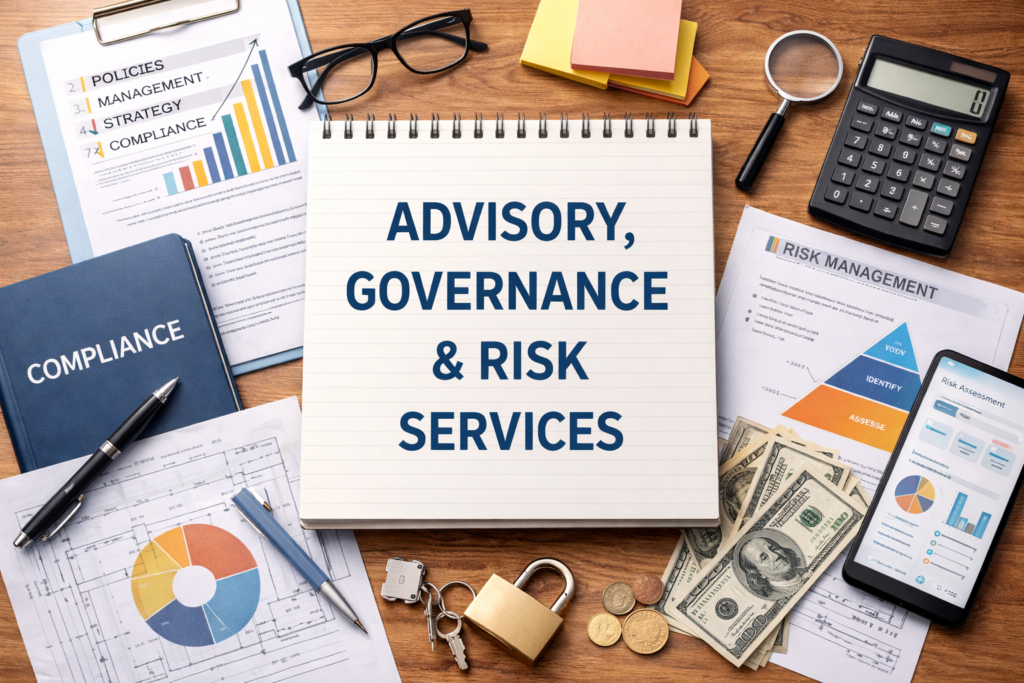
Advisory, Governance & Risk Services: A Complete Guide for Modern Businesses
Blog

Advisory, Governance & Risk Services: A Complete Guide for Modern Businesses

In today’s rapidly evolving business environment, organizations face increasing challenges related to compliance, financial transparency, operational risks, and regulatory requirements. As businesses expand and operate in competitive markets, the need for strong decision-making frameworks and structured risk management becomes essential. This is where Advisory, Governance & Risk Services play a critical role. These services help companies strengthen leadership practices, manage risks effectively, and maintain compliance with laws and regulations. Advisory, governance, and risk management services provide businesses with expert guidance to ensure sustainable growth, accountability, and transparency. They help organizations identify potential risks, create effective governance structures, and develop strategies that support long-term business success. For startups, SMEs, and large corporations alike, these services act as a strategic foundation for responsible and resilient operations. Understanding Advisory Services in Modern Businesses Advisory services involve professional guidance provided by experts to help businesses make informed decisions. These services can include financial advisory, strategic consulting, operational planning, and regulatory compliance assistance. Advisors evaluate a company’s operations, financial systems, and management strategies to recommend improvements that enhance performance and efficiency. Businesses often rely on advisory services during periods of growth, restructuring, or market expansion. Advisors provide insights into market trends, financial planning, risk assessment, and strategic management. By leveraging expert advisory support, organizations can develop stronger strategies, improve decision-making processes, and achieve sustainable growth in competitive industries. The Role of Corporate Governance in Business Success Corporate governance refers to the system of rules, policies, and processes that guide how a company is managed and controlled. Effective governance ensures transparency, accountability, and ethical decision-making within an organization. It also helps protect the interests of stakeholders, including shareholders, employees, customers, and regulatory authorities. Strong governance frameworks establish clear roles and responsibilities for management and the board of directors. They promote responsible leadership and ensure that business decisions align with legal and ethical standards. Companies with robust governance structures often enjoy higher investor confidence, better operational efficiency, and stronger reputations in the marketplace. Governance services help organizations design policies, compliance frameworks, internal controls, and reporting mechanisms that support responsible business practices. These systems ensure that organizations remain compliant with regulations while maintaining transparency in financial and operational activities. Risk Management and Its Importance in Business Operations Risk is an unavoidable part of any business activity. Organizations face various types of risks, including financial risks, operational risks, legal risks, cyber risks, and reputational risks. Without proper risk management strategies, these challenges can significantly impact a company’s stability and growth. Risk advisory services help businesses identify, evaluate, and mitigate potential threats before they become major issues. Professionals conduct detailed risk assessments to analyze vulnerabilities within business operations, financial systems, and regulatory compliance processes. Once risks are identified, experts develop mitigation strategies to reduce potential damage. This may include implementing stronger internal controls, improving compliance procedures, enhancing cybersecurity measures, or restructuring operational processes. Effective risk management allows businesses to operate with confidence and resilience in uncertain environments. Governance, Risk, and Compliance (GRC) Framework Many organizations implement an integrated Governance, Risk, and Compliance (GRC) framework to manage these three critical areas efficiently. A GRC framework ensures that governance policies, risk management strategies, and regulatory compliance requirements work together in a coordinated manner. The primary objective of a GRC framework is to align business objectives with regulatory requirements and risk management practices. By integrating these functions, businesses can reduce duplication of efforts, improve communication across departments, and create a structured approach to decision-making. A well-designed GRC system enables organizations to monitor compliance obligations, identify potential threats, and maintain transparency in corporate operations. This integrated approach strengthens internal controls and supports long-term business sustainability. Key Benefits of Advisory, Governance & Risk Services Advisory, governance, and risk services provide numerous advantages for modern businesses. One of the most important benefits is improved strategic decision-making. With expert guidance and data-driven insights, organizations can make well-informed decisions that support growth and innovation. Another key benefit is regulatory compliance. Businesses must adhere to complex legal and financial regulations, and failing to comply can lead to penalties or reputational damage. Professional governance and risk services help organizations understand and meet these regulatory obligations effectively. These services also enhance operational efficiency by identifying weaknesses in internal processes and recommending improvements. By strengthening governance structures and risk management practices, businesses can build stronger foundations for long-term success. Additionally, advisory and risk services increase investor confidence. Transparent governance and effective risk management demonstrate that a company is responsible and trustworthy, which attracts investors, partners, and stakeholders. Advisory and Risk Services for Different Types of Businesses Advisory, governance, and risk services are beneficial for organizations of all sizes. Startups often require guidance on regulatory compliance, financial planning, and governance frameworks as they establish their operations. SMEs benefit from risk assessments and operational improvements that enhance business stability. Large corporations rely on advanced risk management strategies and governance systems to manage complex operations and global regulatory requirements. These organizations often face multiple operational risks, making professional advisory support essential for maintaining compliance and operational efficiency. Industries such as finance, healthcare, technology, and manufacturing particularly benefit from structured governance and risk management frameworks due to strict regulatory environments and high operational complexity. The Growing Importance of Risk Advisory in the Digital Era The digital transformation of businesses has introduced new risks related to cybersecurity, data privacy, and technological disruptions. Organizations increasingly rely on digital systems, cloud platforms, and online operations, which create new vulnerabilities. Risk advisory services now focus heavily on cybersecurity governance, data protection frameworks, and digital risk management strategies. Businesses must implement strong IT governance policies and cybersecurity measures to protect sensitive data and maintain customer trust. Advisors help organizations assess digital risks, strengthen security infrastructure, and implement compliance frameworks related to data protection regulations. These efforts are essential for maintaining business continuity and protecting organizational reputation. Building a Strong Governance Culture Effective governance is not just about policies and regulations—it also involves building a culture of accountability and ethical leadership within an organization. Companies must promote transparency, integrity, and responsible

Blog

Consulting & Transaction Advisory: Strategic Support for Business Growth and Value Creation

In today’s dynamic business environment, organizations face complex challenges related to financial restructuring, mergers and acquisitions, strategic investments, and corporate governance. Consulting & Transaction Advisory services provide expert guidance to businesses seeking to optimize operations, execute strategic deals, and enhance organizational value. These advisory services combine financial expertise, regulatory compliance, and market insight to support decision-making across diverse corporate transactions. Businesses leveraging Consulting & Transaction Advisory gain a competitive edge, ensure regulatory adherence, and maximize returns from strategic initiatives. Understanding Consulting & Transaction Advisory Consulting & Transaction Advisory encompasses a wide range of services aimed at assisting businesses in achieving their strategic and financial objectives. Core components include: These services enable informed decision-making, mitigate risks, and facilitate smooth execution of corporate transactions. Mergers and Acquisitions (M&A) Advisory Mergers and acquisitions are critical tools for business expansion, market consolidation, or strategic investment. Consulting & Transaction Advisory supports M&A by providing: Professional advisory ensures that M&A transactions create maximum value while minimizing risks and compliance challenges. Financial Advisory and Valuation Accurate financial assessment is the cornerstone of any corporate transaction. Advisory services provide: Comprehensive valuation ensures that organizations make informed decisions during acquisitions, divestitures, or capital raising initiatives. Due Diligence Services Due diligence is essential for mitigating risks in strategic transactions. Transaction advisory includes: Thorough due diligence minimizes the risk of post-transaction disputes and financial exposure. Capital Raising and Funding Advisory Businesses often require external funding for growth, expansion, or strategic investments. Advisory services assist in: Strategically structured capital raising enables organizations to achieve funding objectives efficiently. Corporate Restructuring and Strategic Planning Corporate restructuring improves operational efficiency, financial health, and organizational agility. Advisory services cover: Restructuring initiatives guided by professional advisory enhance long-term profitability and market positioning. Regulatory Compliance and Risk Management Corporate transactions are subject to numerous regulatory and compliance requirements. Consulting & Transaction Advisory ensures: Effective advisory minimizes regulatory risks and strengthens corporate governance. Strategic Benefits of Consulting & Transaction Advisory Engaging professional consulting and transaction advisory offers significant advantages: Businesses leveraging advisory services are better positioned to execute complex transactions successfully. Integration with Corporate Strategy Transaction advisory aligns closely with an organization’s broader strategic objectives. By integrating advisory services with corporate strategy, businesses can: A strategic approach ensures that advisory insights drive tangible business outcomes. Technology and Advisory Services Modern consulting and transaction advisory leverage technology for efficiency and accuracy. Tools and techniques include: Technology enhances advisory quality, reduces errors, and provides actionable insights for decision-makers. Conclusion Consulting & Transaction Advisory is a critical enabler for organizations seeking to navigate complex corporate transactions, optimize financial performance, and enhance strategic decision-making. From mergers and acquisitions to capital raising, due diligence, and corporate restructuring, professional advisory provides the expertise, insights, and governance necessary for successful outcomes. By engaging consulting and transaction advisory services, businesses can maximize value creation, minimize risk, and ensure compliance with regulatory frameworks. Structured, professional guidance empowers organizations to execute transactions efficiently, achieve strategic objectives, and sustain long-term growth in a competitive business environment.

Trusted Taxation & Regulatory Services: Ensuring Accuracy, Compliance, and Growth
Blog

Trusted Taxation & Regulatory Services: Ensuring Accuracy, Compliance, and Growth

In today’s highly regulated business environment, taxation and regulatory compliance are no longer routine back-office functions—they are strategic necessities. Whether you are a startup, MSME, or large enterprise, maintaining accurate tax records and complying with evolving regulations is essential for sustainable growth. Trusted taxation and regulatory services provide businesses with the expertise, systems, and confidence needed to operate smoothly while avoiding costly penalties and legal complications. Understanding Taxation & Regulatory Services Taxation and regulatory services encompass a wide range of professional support, including tax planning, return filing, GST compliance, regulatory filings, audit support, and advisory services. These services are designed to help businesses meet statutory requirements while optimizing their tax position. In India, the regulatory landscape is dynamic, with frequent updates in GST rules, income tax provisions, corporate compliance norms, and reporting standards. Businesses that fail to keep pace often face notices, penalties, or reputational damage. This is where experienced tax professionals and regulatory advisors play a crucial role. Why Accuracy in Tax Matters Is Critical Accuracy is the foundation of effective tax compliance. Even minor errors in filings can trigger scrutiny from authorities. Incorrect GST returns, mismatched input tax credit claims, or delayed income tax filings can lead to: Professional taxation services implement robust review mechanisms, reconciliation processes, and automated tools to minimize errors. With expert oversight, businesses can maintain clean financial records and respond confidently to any regulatory queries. The Compliance Imperative for Indian Businesses Regulatory compliance in India has become more technology-driven and data-intensive. Authorities now rely heavily on data matching, AI-based scrutiny, and real-time reporting systems. As a result, manual and reactive compliance approaches are no longer sufficient. Key compliance areas include: GST Compliance:Timely filing of GSTR-1, GSTR-3B, reconciliation of GSTR-2B, and proper input tax credit management are essential for smooth GST operations. Income Tax Compliance:Accurate computation of taxable income, advance tax planning, TDS filings, and annual return submission help businesses avoid scrutiny. Corporate Regulatory Filings:Companies must comply with ROC filings, annual returns, board resolutions, and other statutory requirements to remain in good standing. Industry-Specific Regulations:Certain sectors such as fintech, healthcare, and e-commerce face additional regulatory oversight that requires specialized expertise. How Trusted Advisors Add Real Business Value Many businesses view taxation as a cost center. However, when handled strategically, taxation and regulatory services become powerful growth enablers. 1. Strategic Tax Planning Experienced professionals analyze your business structure, revenue streams, and expenses to identify legitimate tax-saving opportunities. Proper planning can improve cash flow, reduce tax liability, and support long-term financial health. 2. Risk Mitigation Regulatory experts continuously monitor compliance deadlines and legal updates. This proactive approach significantly reduces the risk of penalties, notices, and litigation. 3. Improved Financial Transparency Accurate tax reporting enhances financial credibility with banks, investors, and stakeholders. Clean compliance records often make it easier to secure funding and partnerships. 4. Time and Resource Efficiency Outsourcing taxation and compliance allows business owners to focus on core operations instead of navigating complex laws and filing systems. 5. Scalability Support As businesses grow, their compliance requirements become more complex. Trusted advisors help implement systems that scale smoothly with expansion. E-E-A-T Approach in Taxation Services Following E-E-A-T (Experience, Expertise, Authoritativeness, Trustworthiness) principles is essential for any professional taxation service provider. Experience:Look for firms with proven experience handling businesses similar to yours. Practical exposure to real cases improves accuracy and advisory quality. Expertise:Qualified chartered accountants, tax consultants, and compliance specialists bring deep technical knowledge that ensures correct interpretation of laws. Authoritativeness:A credible service provider maintains updated knowledge of regulatory changes and follows recognized professional standards. Trustworthiness:Confidentiality, ethical practices, transparent pricing, and timely communication build long-term client trust. Businesses should always verify credentials, client reviews, and service scope before choosing a taxation partner. Common Challenges Businesses Face Despite best intentions, many organizations struggle with compliance due to: Professional taxation services address these pain points through automation, expert review, and structured compliance calendars. Technology’s Role in Modern Tax Compliance Digital transformation has significantly improved tax management. Modern service providers use: These technologies improve accuracy, reduce human error, and provide business owners with real-time visibility into their tax position. Choosing the Right Taxation & Regulatory Partner Selecting the right service provider is a critical decision. Consider the following factors: Avoid choosing solely based on low fees. In taxation matters, quality and reliability always outweigh short-term cost savings. Future Trends in Tax and Regulatory Compliance Looking ahead, businesses should prepare for: Organizations that adopt professional, technology-enabled taxation services today will be better positioned for tomorrow’s regulatory environment. Conclusion Trusted taxation and regulatory services are no longer optional—they are essential pillars of responsible business management. From ensuring filing accuracy to enabling strategic tax planning, professional advisors help businesses stay compliant, financially efficient, and growth-ready. In an era of increasing regulatory oversight, companies that invest in expert tax support gain a significant competitive advantage. By prioritizing accuracy, embracing technology, and partnering with experienced professionals, businesses can transform compliance from a burden into a powerful driver of stability and growth.

Audit & Assurance in India: Complete Guide for Businesses, Compliance, and Trust
Blog

Audit & Assurance in India: Complete Guide for Businesses, Compliance, and Trust

Audit and assurance services play a critical role in maintaining financial transparency, corporate accountability, and investor confidence. Whether you run a startup, SME, or large corporation, proper auditing ensures compliance with laws, improves financial accuracy, and strengthens business credibility. This article explains Audit & Assurance in India using E-E-A-T principles (Experience, Expertise, Authoritativeness, Trustworthiness) to provide accurate and reliable information suitable for blogs. What Is Audit & Assurance? Audit and assurance are professional services that evaluate financial records, internal controls, and compliance processes of an organization. These services help detect errors, prevent fraud, and improve financial management. Legal Framework for Audit in India Audit in India is regulated by laws and professional standards such as: These laws require certain businesses to conduct statutory audits and maintain financial records. Types of Audit & Assurance Services 1. Statutory Audit A statutory audit is mandatory for companies registered under the Companies Act, 2013. It verifies financial statements and ensures compliance with legal standards. 2. Internal Audit Internal audits evaluate internal processes, risk management, and operational efficiency. 3. Tax Audit Tax audits under the Income Tax Act, 1961 verify income reporting and tax compliance. 4. GST Audit GST audits check compliance with tax rules under the Goods and Services Tax Act. 5. Forensic Audit Forensic audits investigate fraud, embezzlement, and financial misconduct. 6. Compliance Audit Ensures business operations follow regulatory standards and company policies. Why Audit & Assurance Are Important Audit services benefit businesses in many ways: Strong audit practices increase credibility with banks, investors, and customers. Audit Process in India The audit process generally includes: Step 1: Planning Auditor understands business operations and identifies risk areas. Step 2: Internal Control Review Auditor checks accounting systems and processes. Step 3: Evidence Collection Financial records, invoices, bank statements, and contracts are examined. Step 4: Testing Transactions are tested for accuracy. Step 5: Audit Report Auditor issues opinion—clean, qualified, adverse, or disclaimer. This process ensures reliable financial reporting. Audit Reports Explained 1. Clean Report Financial statements are accurate. 2. Qualified Report Minor issues exist. 3. Adverse Report Financial statements are incorrect. 4. Disclaimer Insufficient evidence for opinion. Businesses aim for clean audit reports to maintain trust. Role of Chartered Accountants in Audit Audit and assurance services must be conducted by qualified professionals registered with the Institute of Chartered Accountants of India. Chartered accountants help in: Their expertise ensures reliable audits. Audit for Startups and SMEs Many small businesses think audit is only for large companies, but startups also benefit from audit services. Benefits for startups include: Regular audits help startups scale smoothly. Digital Audits and Technology Modern audits use technology like: Technology makes audits faster and more accurate. Common Audit Mistakes to Avoid Businesses often make errors such as: Proper accounting systems prevent audit problems. Benefits of Strong Audit & Assurance Practices Audits are not just legal requirements—they are tools for growth. Future of Audit & Assurance in India The future of audit includes: Businesses must adapt to new audit standards to stay competitive. Conclusion Audit & assurance services are essential for business success, legal compliance, and financial transparency. Whether you are a startup or large company, proper auditing builds trust, prevents fraud, and supports growth. For reliable audit services, consult qualified chartered accountants and registered audit firms. Professional guidance ensures accuracy and compliance with Indian laws.

Scroll to Top